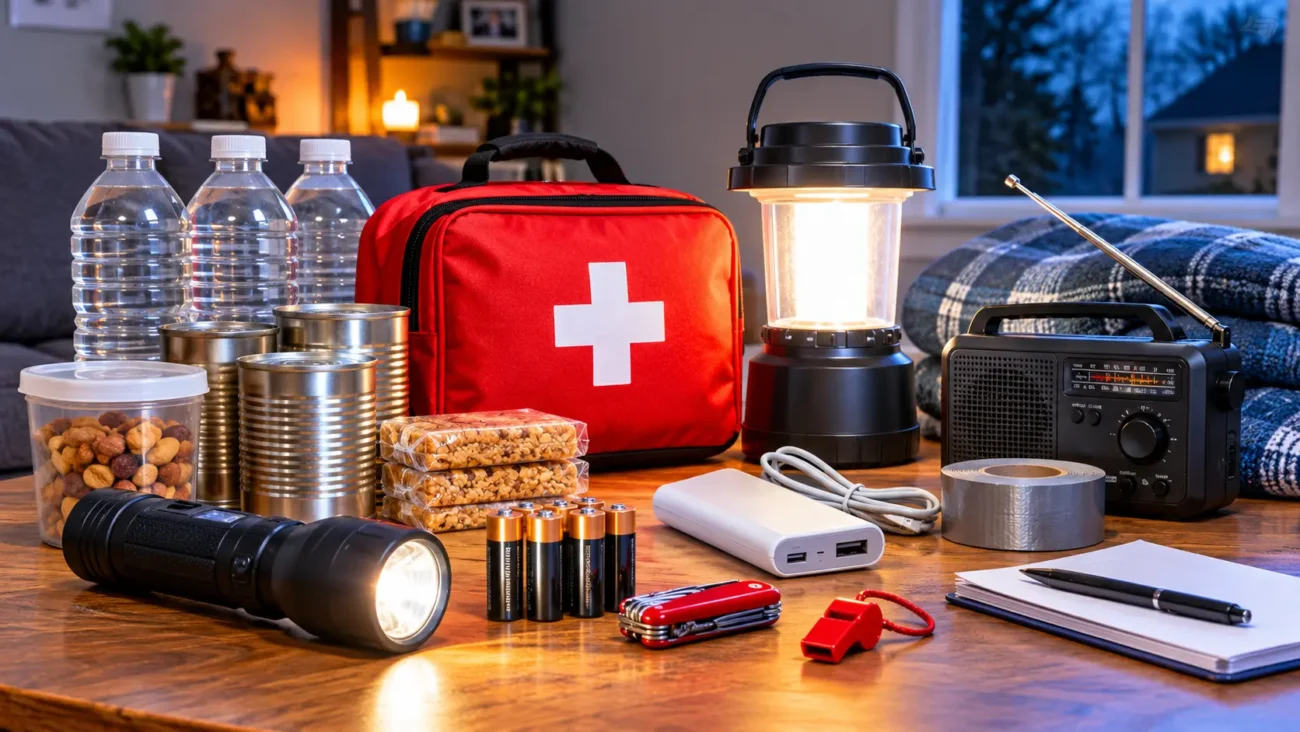
Quick Answer: A good home emergency kit for power outages has water (one gallon per person per day), three days of food that needs no cooking, a torch with spare batteries, a battery or hand-crank radio, a first aid kit, phone chargers, cash, and any medicines you need. Add warm blankets in winter and a cooler with ice for food safety.
Suddenly the lights go out! Your fridge has stopped working. While most people will think of this at the last minute, when you’re going to the store you’ll find that everyone else had the same idea. To help you build an emergency kit while the lights are still working, below is a list of supplies to include in your emergency kit. The recommendations below come from FEMA, the USDA, and the Red Cross.
What Supplies Do You Need for a Power Outage?
Quick Answer: You need light, water, food, a way to charge your phone, first aid supplies, and cash. These six things cover almost every power cut, short or long.
Here’s the full list, broken into simple groups so nothing gets missed.
Light and Power
- A torch (flashlight) for each person, plus spare batteries
- A battery-powered or hand-crank radio, ideally a NOAA weather radio for storm alerts
- A portable power bank, fully charged, for phones
- Candles are risky indoors — a battery lantern is a safer choice
Water and Food
- One gallon of water per person, per day, for at least three days
- Food that doesn’t need cooking or a fridge: tinned food, crackers, peanut butter, dried fruit
- A manual tin opener (an electric one won’t help you here)
- Baby formula or pet food if needed
Health and Safety
- A basic first aid kit (plasters, antiseptic, pain relief)
- At least a week’s supply of any prescription medicine
- A spare pair of glasses if you wear them
- A carbon monoxide alarm with battery backup
Money and Documents
- Cash in small notes — card machines and cash points don’t work without power
- Copies of ID, insurance papers, and bank details in a waterproof folder
Comfort Items
- A warm blanket or sleeping bag for each person
- A change of clothes suited to the weather
- Something to keep kids occupied — cards, books, simple games
How to Prepare Your Home for a Blackout
Quick Answer: Charge everything before a storm, keep your fridge and freezer shut, and know where your kit and torches live in the dark.
Here are the steps that make the biggest difference:
- Charge phones, laptops, and power banks the moment you hear a storm or outage warning.
- Freeze a few bottles of water ahead of time. If the power goes, they help keep your fridge cold and give you drinking water as they thaw.
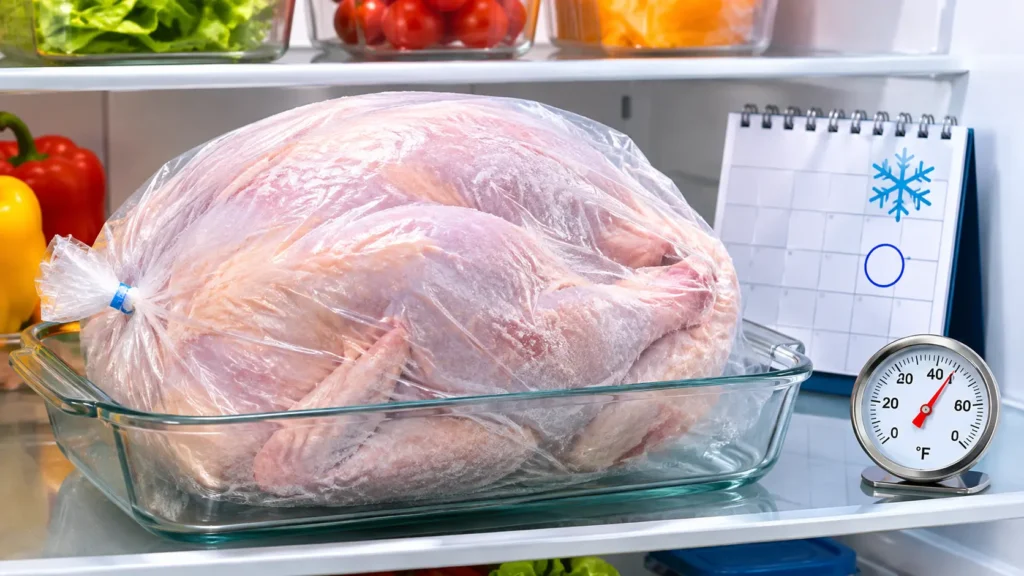
- Keep your fridge and freezer doors shut. Every time you open the door, cold air escapes and your food safety window shrinks.
- Unplug sensitive electronics, such as TVs and computers, to protect them from a power surge when electricity comes back on.
- Know your kit’s spot. Store it somewhere easy to reach in the dark — not at the back of a cupboard.
- Never run a generator indoors or near windows. Keep it at least 20 feet from your house to avoid carbon monoxide poisoning.
- Tell your energy supplier if anyone in your home depends on powered medical equipment, so you’re flagged as a priority during outages.
For more detail, Ready.gov’s official power outage guide is a solid, free resource: ready.gov/power-outages.
How Much Emergency Water Should a Family Store?
Quick Answer: One gallon per person, per day, for a minimum of three days. A family of four needs at least 12 gallons.
Allow enough to cover drinking requirements, cooking and washing. In regions where long-term power cuts are common (for example due to extreme weather conditions such as hurricanes or heavy snow), store 7 days worth. Store in a cool dark place, but make sure to replace every 6 months. You may want to buy bottled water, or put clean water in clean containers.
How to Keep Food Safe During a Power Outage
Quick Answer: A closed fridge keeps food safe for about 4 hours. A full freezer holds for about 48 hours, or 24 hours if it’s only half full. Once those windows pass, throw perishable food out.
This is one area where guessing can genuinely make you ill, so it’s worth following the USDA’s rule closely:
| Appliance | Door kept shut | Safe time limit |
| Refrigerator | Yes | About 4 hours |
| Full freezer | Yes | About 48 hours |
| Half-full freezer | Yes | About 24 hours |
A few practical tips:
- Keep an appliance thermometer in both the fridge and freezer. Safe readings are 40°F or below in the fridge, 0°F or below in the freezer.
- If the power will be out a while, move milk, meat, and leftovers into a cooler packed with ice or frozen gel packs.
- Group food together in the freezer — it stays cold longer when packed tightly.
- Frozen food that still has ice crystals, or reads 40°F or below, is safe to refreeze, even if it’s partly thawed.
- When in doubt, throw it out. Spoiled food doesn’t always look, smell, or taste any different from safe food, which is exactly why the 4-hour and 48-hour rules matter.
For the complete official chart, the USDA’s food safety page is worth bookmarking: USDA — Avoid Foodborne Illness During Power Outages.
Emergency Supplies for a Winter Storm
Quick Answer: On top of your usual kit, add extra blankets, warm clothing layers, a way to heat the home safely, and a plan for burst pipes.
Winter outages bring their own risks — mainly cold and carbon monoxide. Add these to your usual list:
- Extra blankets, sleeping bags, and warm layers for every person
- Hand and foot warmers
- Rock salt or sand for icy paths
- A safe backup heat source, such as a properly vented space heater — never a gas oven or barbecue indoors
- Pipe insulation or a plan to let taps drip slightly to stop pipes freezing
- A snow shovel and extra fuel for a snow blower, if you use one
The Red Cross has clear guidance on using generators and heaters safely during winter outages, worth a read before the cold weather sets in: Red Cross — Safe Generator Use.
Quick Checklist Recap
- Water: 1 gallon per person, per day (3-day minimum)
- Food: 3 days, no cooking needed
- Torch, batteries, radio
- Power bank and charging cables
- First aid kit and medicines
- Cash in small notes
- Blankets and warm clothing (extra in winter)
- Cooler and ice packs for the fridge
- Carbon monoxide alarm
- Copies of important documents
Frequently Asked Questions
What should be in a home emergency kit for power outages?
Water, non-perishable food, a torch, spare batteries, a radio, first aid supplies, phone chargers, cash, and any medicines your household needs.
What supplies do you need for a power outage?
At minimum: light, water, food that needs no cooking, a way to charge your phone, first aid basics, and cash for when card machines don’t work.
How to prepare your home for a blackout?
Charge devices ahead of time, freeze bottles of water, keep fridge and freezer doors shut, unplug sensitive electronics, and keep your kit somewhere easy to find in the dark.
How much emergency water should a family store?
One gallon per person, per day, for at least three days. A family of four should store a minimum of 12 gallons.
How to keep food safe during a power outage?
Keep the fridge and freezer closed. Fridge food stays safe for about 4 hours; a full freezer holds for about 48 hours. After that, throw perishables out.
What emergency supplies do I need for a winter storm?
Your usual kit plus extra blankets, warm clothing, hand warmers, rock salt, and a safe backup heat source that isn’t a gas oven or outdoor grill.
How long does a power outage usually last?
Most last a few hours, but storms or grid damage can stretch outages to several days. This is why FEMA recommends planning for at least three days, with a week’s supply if you live in a storm-prone area.