
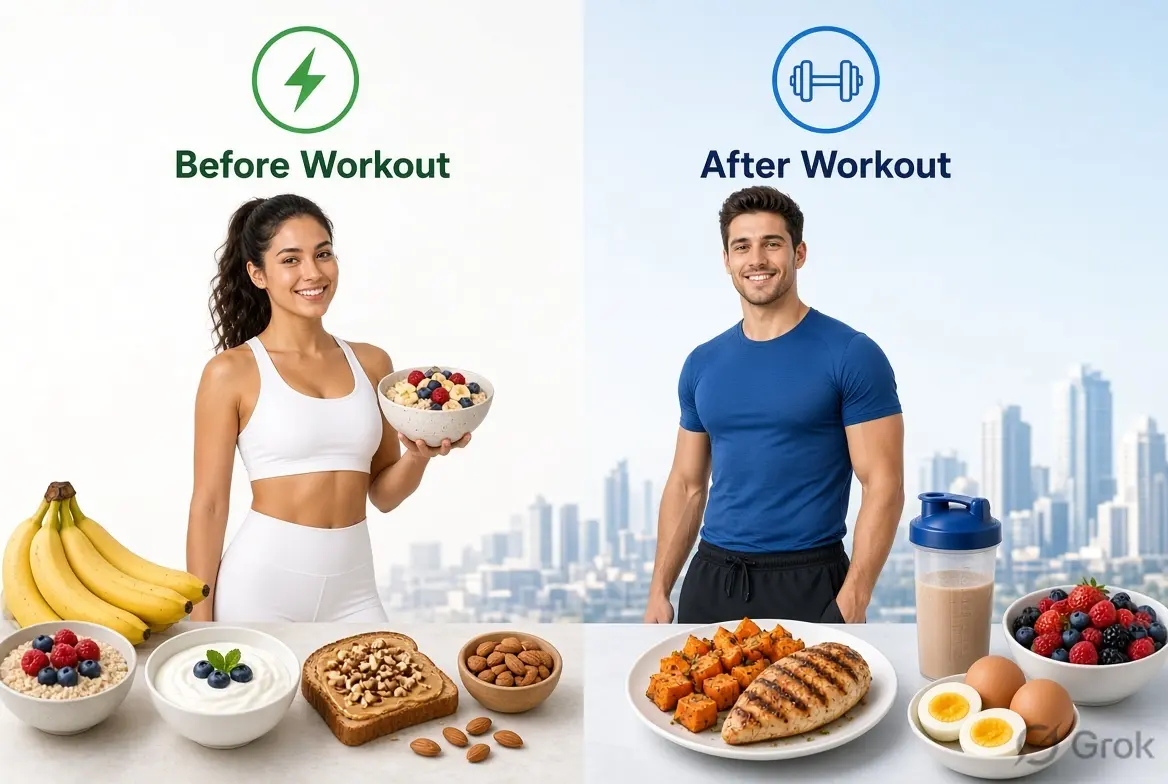
You’ve got your gym bag packed and your workout planned. But what’s on your plate matters just as much as what you do on the gym floor. Eat the wrong thing at the wrong time and you’ll feel sluggish, crampy, or wiped out before you even hit your stride. Get it right, and you’ll have steady energy during your workout and recover faster afterward.
Here’s a simple breakdown of what to eat before and after a workout, backed by guidance from registered dietitians and sports nutrition research, plus real food examples you can grab from your own kitchen.
Why Knowing What to Eat Before and After a Workout Matters
Your body runs on two main fuels during exercise: carbohydrates and, to a lesser extent, fat. Carbs break down into glucose, which your muscles store as glycogen and burn for energy. Eat too close to your workout and your body is stuck digesting while it’s also trying to power your muscles, which is a recipe for cramps, bloating, or that heavy, sluggish feeling. Eat too little, too early, and you’ll run out of gas halfway through your set.
The short answer: eat carbs before your workout for fuel, and pair carbs with protein after your workout for recovery. The Academy of Nutrition and Dietetics notes that carbohydrates supply roughly 50 to 60 percent of the energy your body uses during the first one to four hours of exercise.
What to Eat Before a Workout
Think of your pre-workout meal as your fuel tank. Carbs should do most of the work here because your body converts them into usable energy fastest. A little protein helps too, but keep fat and fiber light since both slow digestion down.
Best Pre-Workout Snacks and Meals
- A banana with a spoonful of peanut butter
- Greek yogurt with berries or a drizzle of honey
- Oatmeal with low-fat milk and sliced fruit
- A slice of whole-grain toast with a scrambled egg
- A handful of nuts and raisins, two parts raisins to one part nuts
- A peanut butter and jelly sandwich, cut into halves
How Long Before Your Workout You Should Eat
If you’re sitting down for a full meal with protein, carbs, and some fat, give yourself one to three hours to digest before you start moving. If you’re grabbing something lighter, like a banana or a granola bar, 30 to 60 minutes before your workout usually works fine. Everyone digests at a different speed, so pay attention to how your stomach feels and adjust from there.
What to Eat After a Workout
Once your workout is done, your muscles are primed to soak up nutrients and start repairing. This is where protein steps into the spotlight, working alongside carbs to restock the glycogen you burned through.
Best Post-Workout Foods for Recovery
- Grilled chicken with rice and vegetables
- A protein smoothie made with banana and milk or a milk alternative
- Low-fat chocolate milk with a handful of pretzels
- Cottage cheese topped with pineapple
- Salmon with a baked sweet potato
- A turkey and cheese sandwich on whole-grain bread
How Soon You Should Eat After Your Workout
Aim to eat within 45 minutes to an hour after you finish. Some experts call this the anabolic window, though newer research suggests it’s more flexible than once believed — a few hours of leeway is fine for most people. Still, sooner is generally better, especially if your next workout is within a day. If a full meal isn’t on hand right away, a quick snack with protein and carbs will hold you over until you can eat a proper meal within about two hours.
Before vs. After: A Quick Comparison
| Before a Workout | After a Workout | |
| Main Goal | Give your muscles quick, usable energy | Repair muscle and refill energy stores |
| Focus Nutrient | Carbs, light on fat and fiber | Protein plus carbs together |
| Best Timing | 1-3 hours before, or a small snack 30-60 min before | Within 45-60 minutes after finishing |
| Portion Size | Small to moderate | Moderate, balanced meal or snack |
Don’t Forget to Hydrate
Food gets most of the attention, but water matters just as much. Drink water throughout the day, not just right before you work out. If your session runs longer than 60 minutes or you’re sweating heavily, consider a sports drink with electrolytes to replace what you lose through sweat. Dehydration alone can tank your energy and make a workout feel much harder than it should.
Common Mistakes to Avoid
- Eating a heavy, high-fat meal right before training, which sits in your stomach and causes discomfort
- Skipping food entirely before a morning workout, then wondering why you feel dizzy or weak
- Waiting several hours to eat anything after an intense session
- Relying only on protein after a workout and forgetting the carbs your muscles also need
- Copying someone else’s exact meal plan instead of testing what actually works for your body
Frequently Asked Questions
Is it bad to work out on an empty stomach?
Not necessarily. Light to moderate exercise, like an easy walk or gentle yoga, is usually fine without eating first. For harder or longer workouts, a small carb-based snack beforehand will give you more consistent energy and better performance.
What should I eat before a morning workout if I’m short on time?
Something quick and easy on the stomach works best, like half a banana, a few crackers, or a small glass of juice. You don’t need a big meal — just enough to take the edge off and give your muscles a bit of fuel.
Do I really need protein right after my workout?
Protein helps repair the muscle fibers that get broken down during exercise, so it’s worth including in your post-workout meal or snack. That said, the exact minute you eat it matters less than getting enough protein across your whole day.
Can I just drink a protein shake instead of eating a meal?
A shake is a convenient option, especially right after training, but try to follow it with a balanced meal within a couple of hours. Whole foods bring fiber, vitamins, and minerals that a shake alone usually can’t match.
What’s the best snack for weight loss goals?
Stick with the same carb-and-protein approach, just watch your portion sizes. Greek yogurt with fruit or a small handful of nuts works well before a workout, while a lean protein source with vegetables works well after.
Should I eat differently before cardio versus weightlifting?
For cardio and endurance work, lean more heavily on carbs for sustained energy. For strength training, keep a similar carb base but make sure you’re also getting protein afterward to support muscle repair.
The Bottom Line
You don’t need a complicated meal plan to fuel your workouts well. Eat a carb-focused snack or meal in the hour or two before you train, then follow up with a mix of protein and carbs within about an hour of finishing. Pay attention to how your body responds, adjust the timing and portions to fit your schedule, and drink enough water throughout the day. Small, consistent choices like these add up to better workouts and faster recovery over time.
Start with one small change this week — maybe a banana before your next session or a glass of chocolate milk right after — and see how your energy shifts.
