
Quick Answer
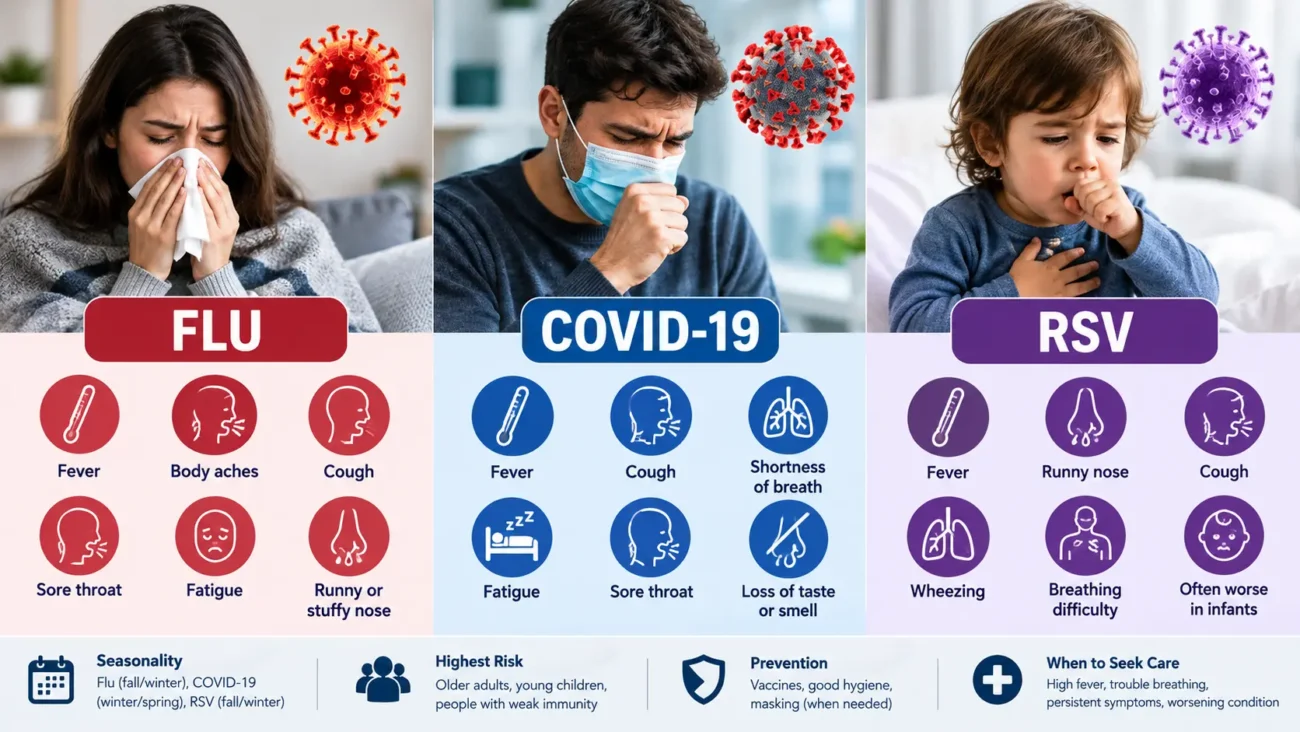
Flu tends to develop, and quickly, with a sudden onset of fever and severe body aches that incapacitate the sufferer within hours. COVID-19 usually has a more gradual onset and may include the loss of taste or smell, which is rare in the flu. RSV infections also have a slower onset and are usually associated with upper respiratory tract symptoms, such as a runny nose and cough, for most adults, but they can lead to severe illness in young children and the elderly, including wheezing. The overlap in symptoms makes diagnostic testing of utmost importance.
Understanding Flu vs COVID vs RSV is crucial during respiratory illness season, as these three contagious infections share many overlapping symptoms. Flu tends to develop quickly with a sudden onset of fever and severe body aches, whereas COVID-19 and RSV usually show a more gradual progression.
Why These Three Get Mixed Up So Easily
Flu, COVID-19, and RSV are all contagious respiratory illnesses that have similar modes of transmission and sets of symptoms. They can all be contracted by inhaling the virus-containing droplets from the sick person’s sneezes or coughs and touching the face after coming into contact with contaminated objects. The symptoms of these illnesses may be similar, including fever, cough, sore throat, runny nose, and a feeling of being ill, and tired. However, there are also some warning signs that may help differentiate between the illnesses and point to the correct diagnosis.
The Biggest Clue: How Fast Symptoms Show Up
This is the detail doctors mention first, and it’s genuinely useful.
- Flu comes on suddenly. One hour you’re fine, a few hours later you’re shivering under a blanket with a fever and aching all over.
- COVID-19 usually builds gradually over two to fourteen days after exposure, though it can still ramp up quickly in some people.
- RSV also tends to start mild, like a regular cold with a runny nose and sneezing, before it gets worse over a few days.
If your symptoms felt like a switch flipped, flu is the more likely suspect. If things crept up on you, think COVID or RSV.
Flu Symptoms: Sudden and Intense
Flu tends to go hard on your whole body, not just your nose and throat. Common signs include:
- Sudden fever or chills (though not everyone with flu runs a fever)
- Cough, often dry
- Sore throat
- Runny or stuffy nose
- Muscle or body aches, which are usually severe with flu
- Headaches
- Fatigue that hits you quickly
- Vomiting and diarrhea, more common in children than adults
Most people recover in a few days to two weeks, though the cough and tiredness can hang around longer, especially in older adults.
COVID-19 Symptoms: Gradual, With a Signature Clue
COVID-19 shares most of flu’s symptom list, which is why testing matters so much. But one symptom still stands out as more closely tied to COVID than the other two: loss of taste or smell. It’s less common with newer variants than it was in 2020, but when it does show up, it’s a strong hint.
Other common COVID symptoms include:
- Fever or chills
- Dry or persistent cough
- Shortness of breath
- Fatigue
- Muscle aches
- Headache
- Sore throat and congestion
- Nausea or diarrhea in some cases
Symptoms can last anywhere from a few days to several weeks, and some people deal with lingering fatigue or brain fog long after the main illness clears up.
RSV Symptoms: Mild for Most Adults, Risky for Babies
For healthy adults, RSV (respiratory syncytial virus) often feels like an ordinary cold: runny nose, mild fever, sneezing, and a cough that can get chesty. Most adults recover within about a week without even realizing it was RSV and not just a cold.
Infants and older adults are a different story. In babies, watch for:
- Irritability and poor feeding
- Decreased activity or unusual sleepiness
- Fast or labored breathing
- Wheezing
- Short pauses in breathing (apnea), which need immediate medical attention
RSV is a leading cause of hospitalization in infants under one year old, and it’s also serious for adults over 60 and anyone with heart or lung conditions. Newer RSV vaccines are now available for older adults and pregnant women, which can lower the risk of severe illness.
Side-by-Side Comparison
| Symptom or Feature | Flu | COVID-19 | RSV |
|---|---|---|---|
| Onset | Sudden | Gradual | Gradual |
| Fever | Common, often high | Common | Mild, sometimes absent |
| Body aches | Severe | Moderate | Mild or rare |
| Cough | Dry, strong | Dry or persistent | Chesty, can include wheezing |
| Sneezing | Rare | Sometimes | Common |
| Loss of taste/smell | Rare | Possible, a key clue | Rare |
| Highest risk group | Young kids, 65+, pregnant | 65+, chronic illness | Infants under 1, 60+ |
| Typical recovery | A few days to 2 weeks | A few days to several weeks | About a week (adults) |
When to Call a Doctor or Head to the ER
Most cases of flu, COVID, and RSV can be managed at home with rest and fluids. But get medical help right away if you or your child notice:
- Trouble breathing or shortness of breath
- Ongoing chest pain or pressure
- Confusion or trouble staying awake
- Bluish lips or face
- Severe or worsening weakness or dizziness
- A fever that won’t come down
- In infants: breathing pauses, blue around the mouth, or refusing to feed
If you have a chronic condition like asthma, diabetes, or heart disease, call your doctor early rather than waiting it out, since any of these three viruses can make existing conditions worse.
Can You Test at Home?
Yes, for flu and COVID. Combination home tests that check for both at once are widely available and approved by the FDA. RSV home tests exist but are less common; most people still need a healthcare provider’s test to confirm RSV, especially for infants or anyone with severe symptoms.
FAQ
Can you have flu, COVID, and RSV at the same time?
Yes, it’s possible to be infected with more than one virus at once, though it’s not common. Having two at the same time usually means a longer, harder recovery, so testing is worth it if symptoms feel unusually severe.
What’s the fastest way to tell flu and COVID apart?
Speed of onset is the best clue. Flu tends to hit suddenly within hours, while COVID usually builds up over a day or two. Still, the only certain way to know is a test.
Does RSV cause loss of taste or smell?
Not typically. Loss of taste or smell is much more closely linked to COVID-19 than to RSV or flu.
How long is each virus contagious?
Flu is usually contagious for about 5 to 7 days after symptoms start. COVID-19 can be contagious for a similar window, sometimes longer. RSV is usually contagious for 3 to 8 days, though infants can spread it for several weeks.
Is there a vaccine for RSV?
Yes. RSV vaccines are now available for adults 60 and older and for pregnant women to protect newborns. There’s also an RSV antibody shot for infants and young children at higher risk.
Should kids stay home from school with these symptoms?
Yes. Keeping a sick child home until fever is gone for 24 hours without medicine, and symptoms are improving, helps stop the spread to classmates and teachers.
The Bottom Line
You can’t always tell flu, COVID, and RSV apart just by how you feel, but paying attention to how fast symptoms came on, whether you’ve lost your sense of taste or smell, and who in your house is sick can point you in the right direction. When in doubt, a quick test and a call to your doctor beat guessing, especially if you’re caring for a baby, an older adult, or anyone with a chronic health condition.