
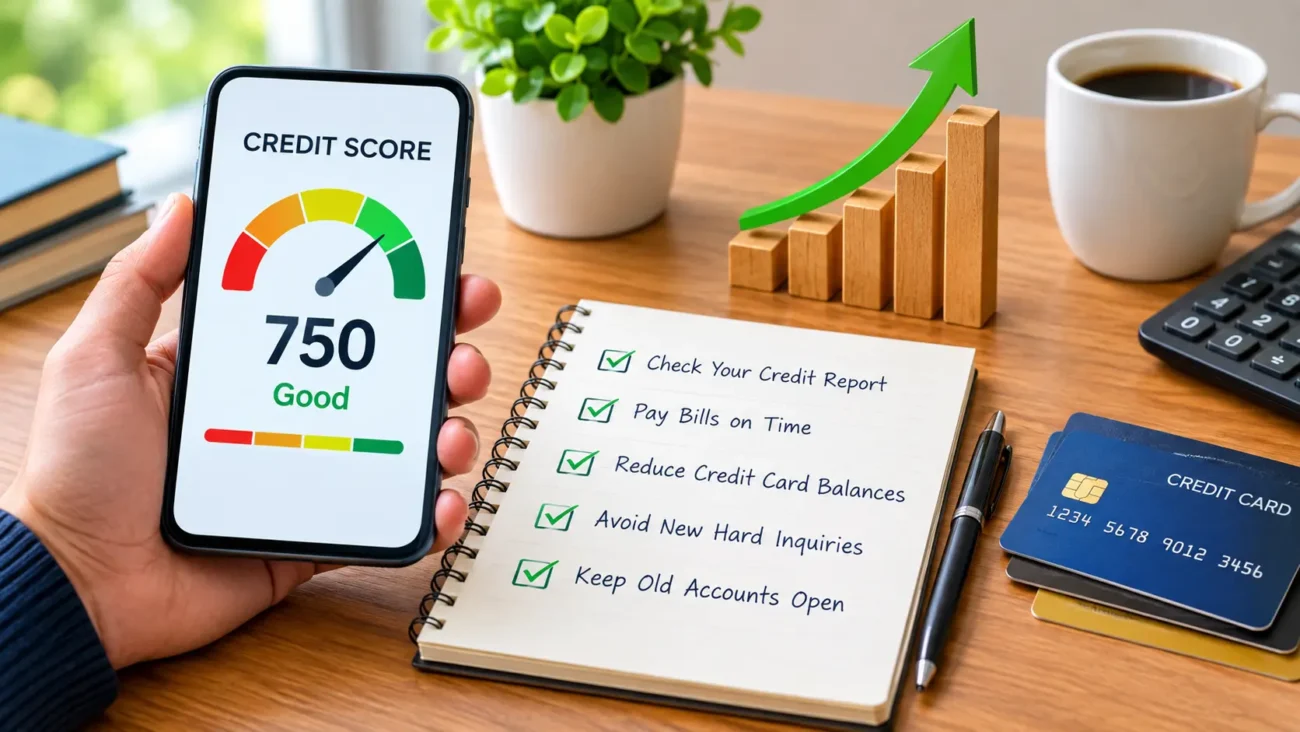
Quick Answer: If you want to improve your credit score quickly, the fastest ways are paying down credit card balances to below 30% of your limit, disputing errors on your credit report, making every payment on time, and asking for a credit limit increase. Some of these steps can raise your score within a single billing cycle.
A good credit score can help you save thousands of dollars. It can reduce the interest rate you are charged on a mortgage, car loan, or credit card. Even your ability to rent an apartment can hinge on your credit score. But you don’t have to wait until “someday” to raise your credit score. Although it is a long-term process, there are several things you can do right now that can improve your credit score dramatically within a few months or even after only one billing cycle
Below you will find a list of what really works according to credit bureaus, consumer advocates, and financial planners.
1. Check Your Credit Report for Errors First
Before making any changes, check credit reports, say experts. Errors on these reports are more common than many people realise — in fact, research shows that one in every five consumers has at least one error on one of their credit reports. This could include an account that was paid late, an account that does not belong to them, or a debt that was paid off years ago.
People can get their free credit reports from all three bureaus (Equifax, Experian and TransUnion) at AnnualCreditReport. com. In case of errors, disputing with the bureau can help. According to CFPB dispute data, successfully disputed items increased scores by 25 points on average, and sometimes by 100 points or more when late accounts or collections were removed.
2. Pay Down Your Credit Card Balances
This is typically the swiftest lever to pull. Credit utilization, or the ratio of your balance to credit limit, is one of the leading factors in your score, right after your payment history. As a rule of thumb, keep your balance below 30% of your limit, if feasible.
Say, for instance, your credit limit is $10,000, try to keep your balance under $3,000. Given that card issuers generally report your balance to the bureaus once a month, you can reduce your balance a few days before your statement closes so as to lower the figure they will report and, in turn, your score for the billing cycle.
3. Never Miss a Payment
Payment history tends to have the highest impact on credit scores compared to other factors. It can severely damage your credit history and stay there for a long time. The only way to prevent this from happening is to pay your bills on time.
The easiest way to accomplish this is by setting up autopay for your credit cards and loans. At least the minimum monthly payment should be covered through autopay. In case you are not comfortable with autopay, set up a reminder on your calendar or phone. Few days of late payment can have a severe impact on your credit score.
4. Ask for a Credit Limit Increase
If Your Card Issuer Raises Your Credit Limit and You keep a constant balance, your utilization rate decreases, thus improving your credit score. This is one of the quickest ways to raise a credit score as many issuers allow an online application in a matter of minutes, and some even do it automatically after a series of on-time payments.
One thing to note, however, is that some issuers may do a hard credit check, which may cause a minor decrease in your score, so it is important to ask the issuer if they do hard or soft checks for credit limit increases.
5. Avoid Applying for New Credit Right Now
Every time you apply for a credit card (or loan), the lender will perform a hard inquiry on your report. Too many requests at once could damage your credit score. If you’re shopping around for the best deal, this is the last thing you want to do right before applying for a mortgage or car loan. It’s much better to space out requests, and only apply for things you intend to actually use.
6. Become an Authorised User on a Trusted Account
If you have little credit history, or some negative marks on your record, getting added as an authorised user to a family member with an excellent history can boost yours. Their good payment history will show up on your report, even if you don’t use their card.
The catch is that if the primary account owner has a missed payment or goes over their limit, it will reflect on your history as well, so only do this if you trust the person enough to be managing their account.
7. Use Tools Like Experian Boost for Everyday Bills
Some services now let you get credit for bills you’re already paying, like your phone plan, streaming subscriptions, utilities, and in some cases rent. These payments don’t traditionally show up on your credit report, so this can add positive history without you changing a single habit.
It won’t work miracles, but for people with a thin credit file, it’s a genuinely easy win.
Key Takeaways
- Check your credit report for errors — around 1 in 5 people has one
- Keep your credit card balances below 30% of your limit
- Never miss a payment; set up autopay or reminders
- Avoid new credit applications right before a big purchase
- Small, everyday bill payments can boost thin credit files
How to Improve Your Credit Score Quickly: FAQs
What is the quickest way to raise my credit score?
Paying down credit card balances and disputing verified errors on your credit report tend to work fastest, sometimes within a single billing cycle or a few weeks.
Can I raise my credit score by 100 points quickly?
It’s possible but not typical. A 100-point jump usually only happens when a serious error, like a wrongly reported late payment or collection, is removed from your report after a successful dispute.
How often should I check my credit report?
At least once a year, and every few months if you’re planning to apply for a mortgage, car loan, or other major credit soon.
Does checking my own credit score lower it?
No. Checking your own score or report is a soft inquiry and has no effect on your credit score, no matter how often you do it.
What credit utilisation ratio is considered good?
Most experts recommend staying below 30% of your available credit limit, though under 10% is considered ideal for the strongest scores.